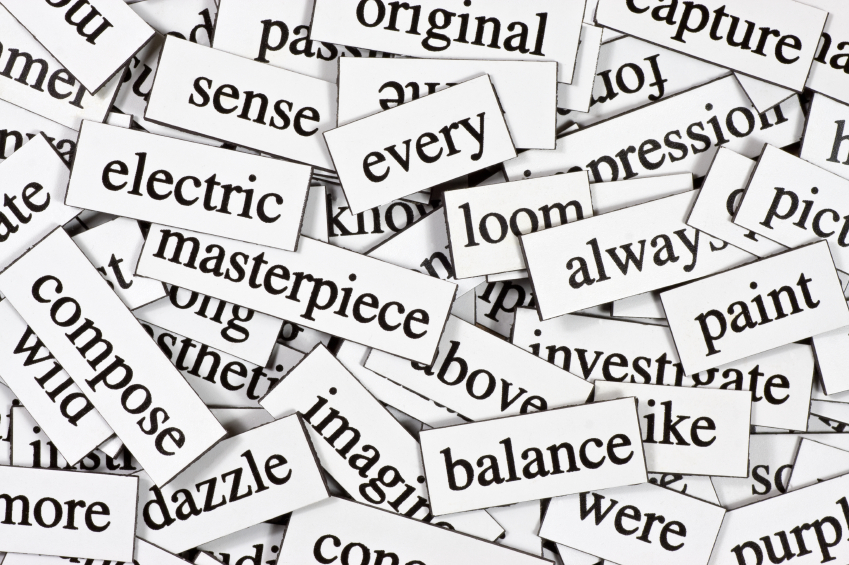
However. Within. Glistened.
Over the past few weeks, I’ve used these words a lot. While writing bits and pieces of DREADSCAPES, I’ve inevitably had to use dozens of adjectives and adverbs to describe quite a few things; From running swiftly to trembling anxiously, adjectives as well as adverbs are both necessary for turning everyday nouns and verbs into the stuff of skin-crawling horror.
Now, as we all know— reading can expose us to great examples of such words as well as how they can be used properly. What I’ve only learned recently, though, is that writing does the exact same thing, but in an entirely more personal way.
For example: The Blood of the Traveler, my in-progress short horror story (see previous blog post), contains quite a few reflective surfaces. Among these are the jagged teeth of an eldritch god, the blue exterior of a 1970’s Cadillac, and even the waves of the ocean at dusk. It’s my job to communicate this attribute to the reader— but I quickly learned that my own lexicon, which I’m mostly proud of, didn’t have much filed under the “reflective surfaces” category stored deep within my brain.
So… what did I do? I put my trust in every English major’s favorite dinosaur: the thesaurus!
Not my proudest attempt at humor.
Seriously, though— USE A THESAURUS. You don’t even have to own one. All you have to do is search “[insert word here] synonym” or “[insert word here] antonym” on Google, and you’re ready to go. Seconds later, you’ll most likely be overwhelmed with synonyms and antonyms of your chosen word that you never even knew existed, just sitting there… itching to be added to your ever-expanding vocabulary.
Once, not too long ago, I encountered a flustered Twitter user who sought to annihilate the concept of synonyms and antonyms all together. A linguistic genocide, if you will.
This particular Netizen argued that, in honest truth, no two words mean exactly the same thing— “large”, while similar, does not mean the same thing as “big”. “Fast” does not mean “quick”. “Evil” does not mean “despicable”. He further argued that, because of this truth, a thesaurus should not be thrust into the face of every young student who needs to expand their vocabulary in early English classes.
I didn’t bother to read the long and argumentative thread below. Instead, I thought it over… and I ended up agreeing with him.
Sort of.
In all honesty, no— I don’t think there are any two words that mean precisely the same thing. While they may imply similar ideas and carry nearly identical connotations, every word in the brilliantly confusing English language is a special little snowflake, at least in my opinion.
After all, what’s really the point in having multiple words that mean the exact. same. thing? Each word, I think, is at the very least meant to carry with it different conversational or social implications. Furthermore, I think that seekers of precise language within writing should keep such implications and connotations in mind when crafting narratives and dialogue of their own.
To be completely fair, though, I think this guy is kinda missing the point of a thesaurus in the first place. Let me explain.
For all I know, whoever invented the thesaurus may have actually agreed with my belief. This person, too, may have believed in the subtle but ever-so-important differences between words and their given synonyms. Yet, as we know, they proceeded with the creation of the thesaurus. Why, you ask? I think I know.
There have been, as of now, countless occasions while writing that the limitations of my own diction have come into view. On these occasions, I turn to (you guessed it) a thesaurus. In doing so, countless times by now, I’ve found that a thesaurus is almost always able to provide not just an array of options for my writing, but words that are frequently better than the word(s) I had been using previously. My lexicon is, as a result, not just expanded— it’s upgraded.
This is where Mr. Anonymous Twitter Guy’s argument falls short. He seems to believe that synonyms and their classification as such serve only to restrict the creative bounds of language instead of doing what they actually do quite well— which is to serve as an organizational method for improving one’s vocabulary and act as a gateway to the world of precise language.
I’m sure I could further this argument in one way or another, but I’m feeling fatigued (synonym for tired). Tune in next week to hear why the dictionary is simply not adequate to be considered a “holy book”.
Thanks for reading! 😀

 ANONYMOUS ANXIETY
Leave a comment